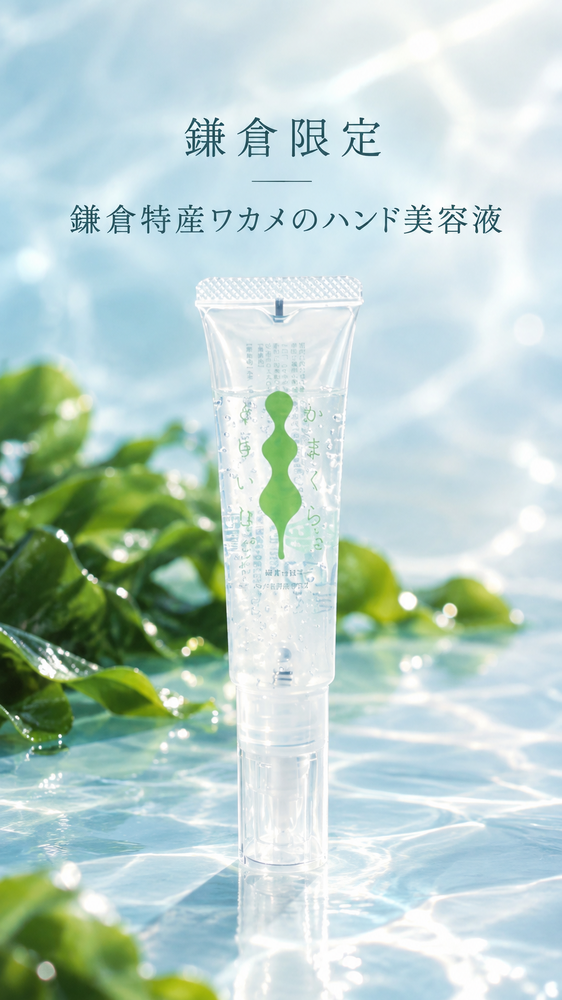
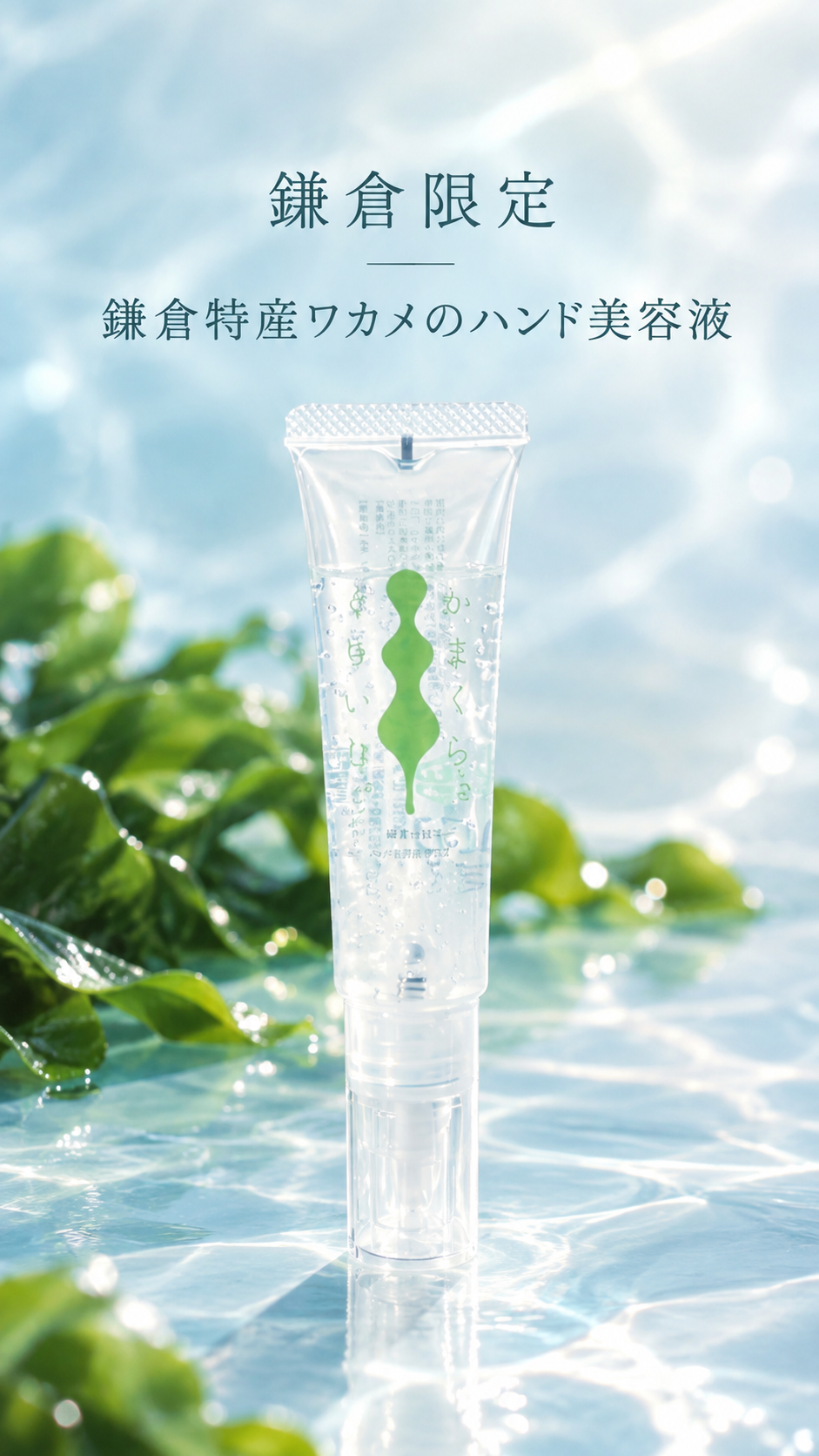
A new Kamakura souvenir that you can only find in Kamakura.
"Kamakura, Cream." is
Extracted from natural wakame seaweed, a specialty of Kamakura.
This is a hand serum formulated with wakame seaweed extract.
Made using only naturally derived ingredients,
Fragrance-free, with a light and pleasant feel.
And there's another thing to look forward to
Choose from our "Kamakura Art Packages".
A variety of art unfolds from a single beauty serum.
Choose your favorite one,
You can take it home with you as a memento of your time in Kamakura.
Also for those looking for non-food souvenirs from Kamakura.
Perfect for yourself or as a gift for someone special.
"Experience the benefits of Kamakura wakame seaweed on your hands. Bring Kamakura art closer to you."
Kamakura Limited Edition
Hand serum specialty store
"Snow hut, cream."
#KamakuraTourism #KamakuraSpecialties #KamakuraSouvenirs #KamakuraGifts #KamakuraTrip
What criteria should you use when choosing souvenirs from Kamakura? Three key points to consider first.
When you start looking for souvenirs in Kamakura, you'll find yourself overwhelmed by the many options, from sweets to trinkets, and it's easy to get lost trying to decide what's right for you. First, decide on three things: "Who will you be giving it to?", "What aspects of Kamakura do you find most appealing?", and "Is it easy to carry home?". This will help narrow down your choices. Don't just choose based on appearance; consider the purpose and your travel plans to maximize your satisfaction.
Consider the recipient and the occasion when you will be giving the gift when deciding what kind of souvenir to give.
When choosing souvenirs from Kamakura, it's helpful to first clarify "who you're giving them to and when" before you start looking for items. This will help narrow down your choices. For family and close friends, it's a good idea to choose while thinking about their preferences and daily lives. For example, sweets for someone with a sweet tooth, or accessories for someone who likes things to wear. Considering the recipient will also make it easier to explain the reason for your gift.
When distributing items to multiple people at work or a gathering, check not only the appearance but also whether they are individually packaged, whether there are enough for everyone, and whether they are easy to distribute. If the number of people in your department is not finalized until the day of distribution, it's safer to choose a slightly larger quantity than necessary. If you are giving food, be sure to check the expiration date and storage instructions. If you have several days until you give the items, or if there is no storage space at work, consider items that can be transported at room temperature.
On the other hand, if you're buying a souvenir for yourself, you can base your decision not only on whether someone else will appreciate it, but also on how you want to preserve the memories of your trip. Options include雑貨 (miscellaneous goods) with colors and designs that remind you of the sea, temples, shrines, and streetscapes you saw in Kamakura, or stationery that will bring back memories of your trip every time you use it. If you're choosing something to display, consider whether you have a place to put it when you get home, and whether its size and weight will be a burden.
Furthermore, the appropriate gift will vary depending on the occasion. When considering whether you'll be handing it over immediately, bringing it to someone you'll meet later, or sending it to someone far away, you'll need to pay attention to the packaging and ease of carrying. Since there are many types of souvenirs from Kamakura, deciding on the recipient, the number of people, and the timing of the gift beforehand is the quickest way to find the perfect item.
The essence of Kamakura can be found in the local scenery and memories of travel.
When choosing a souvenir that's uniquely Kamakura, you don't need to decide based solely on whether it says "Kamakura" on it. Using memorable scenery and events from your trip as clues will make it easier to find something meaningful to you. Recall places that left a lasting impression on you—the quiet grounds of temples and shrines, the sunlight on the beach, the old buildings lining the alleys—and look for colors, shapes, and materials that evoke a similar atmosphere.
For example, if the time spent gazing at the sea was particularly memorable, small items with a blue or white color scheme might evoke memories of that trip. If you want to preserve memories of visiting temples and shrines, you could choose items with calming colors or those that have a handcrafted feel. It doesn't have to be limited to items that imitate specific landmarks; anything that reminds you of the scenery you saw allows you to convey to the recipient, "I found this when I walked through this place."
Paying attention to local materials and the ingenuity of artisans is one way to discover the essence of Kamakura. If the product description or store information mentions the origin of the materials or the background of the production, try to find out what the connection is. However, it is important not to assume a connection to the region based solely on the impression that it is Kamakura, but to check the labels and explanations. When you choose something with an understanding of its background, the words you use to describe the product will become more specific.
It's a good idea to take a photo or make a short note in your notebook about where you bought the item and how you felt when you held it. When you give the souvenir later, adding a few words about the scenery or events of that time will allow you to share the atmosphere of your trip, which is difficult to convey with the item alone. When choosing souvenirs in Kamakura, it's not just about finding local specialties, but also about reflecting on what you saw and felt in Kamakura, which will make the selection process more enjoyable.
How to spot souvenirs that can only be bought in Kamakura
If you're looking for something you can only buy in Kamakura, don't just decide based on the word "limited edition." Check the sales location, the producer, and their connection to the local area. You'll see similar-looking products in tourist areas, so reading the labels and descriptions will make a big difference in your satisfaction. Here are some points to check that will be helpful when you're looking for something special.
In addition to regional restrictions, be sure to check the sales locations and background information.
When looking for souvenirs that can only be bought in Kamakura, don't just rely on the "limited edition" label; also check where they are sold and what the background of the product is. In tourist areas, you'll find many products featuring Kamakura-like designs and place names, but sometimes the connection to the region isn't clear from the appearance alone. By reading the labels and descriptions before choosing, you'll be able to more easily explain why you chose that particular item when giving it as a gift.
The first thing you should check is where and when the product is sold. You can find out if it's sold at specific stores, widely available in stores around Kamakura, or for a limited time only by looking at the store's information, product description, or official information from the manufacturer. Even if it says "Kamakura Limited," what makes it limited may vary depending on the product, so if you're curious, it's a good idea to ask a store employee.
Next, let's look at the descriptions of the materials, manufacturing process, and craftsmen. Understanding the background—whether materials from Kamakura are used, whether local culture and scenery are incorporated into the design, or whether local artisans are involved—will deepen your understanding of the product. However, just because there is no description doesn't necessarily mean there is no connection to the region. If you need reliable information, check the seller's information.
Focusing too much on rarity can lead to overlooking the recipient's preferences and ease of transport. If you're distributing them at work, check for individual packaging and quantity; if you're taking them long distances, also consider the weight and durability. When choosing souvenirs from Kamakura, don't just decide on their specialness based on the word "limited edition"; consider the sales location, background, and compatibility with the recipient to increase your chances of finding a truly satisfying item.
Choosing items that remind you of the scenery you encountered on your travels is also a good idea.
If you're looking for a special souvenir from Kamakura, consider not only its limited availability or regional specialties, but also whether it evokes memories of the scenery you encountered during your trip. Think back to a memorable moment: the sea viewed from the slopes of Hase, the trees around temples and shrines, or a small shop you visited during your stroll. Choosing an item with colors, shapes, or materials that evoke that scenery will create a souvenir that is linked to your travel memories.
For example, someone who was deeply moved by time spent by the sea might be drawn to雑貨 (miscellaneous goods) in shades of blue or sand reminiscent of the beach. If you were drawn to the tranquil atmosphere of a temple grounds, items that utilize the textures of materials like wood or paper would also be good choices. You don't necessarily need to choose products that bear the name of a famous place. What matters is that when you hold an item in your hands, you feel like it "reminds you of this scenery," and that's what makes your selection uniquely yours.
When giving it as a gift, try adding a short note about where you found the item or the circumstances surrounding it. Even a short explanation, such as "I found it while strolling around" or "It reminded me of the colors of the day I gazed at the sea," will help the recipient imagine your travels. By conveying not only the characteristics of the item itself but also the reason you chose it, it can also serve as a conversation starter.
If you're buying it for yourself, you can keep it together with photos of the places you visited and your travel journal. When you use or look at the item after returning home, the scenery and feelings of that day may come flooding back. It's also a good idea to jot down the shop where you bought it and any memorable moments next to the photos. Souvenirs from Kamakura offer the joy of choosing items that not only carry the name of the place with you, but also serve as a memento of your experiences during your trip.
Points to consider when choosing cute souvenirs and trinkets from Kamakura
When choosing Kamakura-style雑貨 (zakka - miscellaneous goods), it's important that they're not only cute but also practical and easy to carry home. Thinking about whether you want to display them or use them daily will help you enjoy them instead of just putting them away after you buy them. Pay attention not only to the colors and motifs, but also to the materials and size to find something that suits you or the person you're buying for.
First, decide whether you'll use it daily or display it, and then choose the shape and size.
When choosing Kamakura-style雑貨 (miscellaneous goods), it's helpful to first decide whether you want something for everyday use or something to decorate your room. Even if you're drawn to something because of its cute appearance, if you can't imagine when or where to use it, it might just end up sitting unused. Try to imagine who will use it and how, and then check the shape and size.
When choosing everyday items such as stationery, small pouches, or fabric products, consider where you'll use them and how you'll store them. For example, if you'll be carrying them in a bag, check if the thickness and weight are manageable. If you're buying a small pouch for home use, make sure it's large enough to hold the items you want to store and that it fits on your desk or shelf. Consider whether it will work with items you already own, such as notebooks and writing instruments.
When looking for decorative items, consider the size of the space where you want to place them and the surrounding colors. Items that look small in a store may have more presence than you imagine when placed in your home. Check the dimensions if they are listed, and also pay attention to the weight and stability. If the item is meant to be hung on the wall, check the installation method and any necessary tools before purchasing.
Since luggage tends to increase during travel, ease of carrying is also important. When choosing large or easily damaged items, consider whether they will be a burden during transport. If you are giving a gift to someone, even if you don't know the size of their home or how they will use it, choosing a size that won't be a problem to store will make it easier to give. When choosing souvenirs and trinkets from Kamakura, consider not only their cute appearance but also how they will be used and where they will be displayed when selecting the shape and size so that the enjoyment continues even after the recipient receives them.
Choose home goods that you can enjoy for a long time by checking the materials and textures.
When choosing miscellaneous goods, in addition to their appearance, be sure to check the material, texture, and finish. Texture and weight, which are difficult to judge from photographs, are easier to judge by actually holding them in your hands. If it's an item you'll use every day, consider whether it feels good to touch each time you touch it and whether it's easy to maintain; this will help you choose something you can enjoy for a long time.
For fabric products, check the thickness and softness of the fabric and whether the stitching is neat. Also, check if the edges are finished properly and if there are any concerns about the handles or fasteners. For ceramic and glass items, check for chips or cracks and whether they feel too heavy when you hold them. For paper products, you'll also want to consider the texture of the surface, how resistant they are to creasing, and whether the packaging is durable enough to prevent damage during transport.
Depending on the material, the color and texture may change with use. To ensure you enjoy these changes, it's a good idea to check the care instructions and handling methods before purchasing. For items that are sensitive to water or easily damaged by strong rubbing, be sure to read the instructions if available. When choosing a gift, consider whether the recipient can use it without special care.
When purchasing fragile souvenirs, it's important to consider how you'll transport them home. Check if the shop can wrap them or if they can be secured to prevent them from moving around in your bag. If you plan to carry them around for a long time during your sightseeing, consider the timing of your purchase. When choosing souvenirs from Kamakura, don't just consider the color and shape; think about the characteristics of the material and how you'll use it, and you'll be able to keep it with you happily even after returning home.
Things to decide before you stop by Komachi Street to look for souvenirs
In places like Komachi Street, where many shops are clustered together, you might be tempted to buy something that catches your eye as you walk, but this can lead to carrying too much luggage or running out of time. Decide on your budget and the purpose of your souvenirs beforehand, and give yourself time to compare items that interest you. Separating what you'll eat on the go from what you'll take home is also a good way to enjoy your stroll.
Before going for a stroll, I roughly decide on my budget and the types of items I want to buy.
When walking through a street lined with shops, like Komachi-dori, you might find yourself drawn to items you hadn't planned on buying, and end up spending more time shopping than you intended. To enjoy your stroll while choosing souvenirs, it's helpful to roughly decide on your budget and the types of items you want to buy before you leave. You don't need to plan everything in detail, but simply organizing who you're buying for and how many people you need will reduce indecision in the shops.
First, consider the total amount you can spend on souvenirs and the approximate cost per person. You can divide your budget between gifts for colleagues and family, or prepare different items for close friends. Counting the number of items needed beforehand will help avoid situations where you buy something that looks appealing but don't have enough for everyone. It's also a good idea to include the cost of packaging and whether you need bags for carrying the gifts home when planning your budget.
Next, decide on one or two conditions you want in the item. Narrowing down your priorities, such as "individually packaged sweets," "light and compact miscellaneous goods," or "non-food items," will make it easier to compare candidates. Adding too many conditions will narrow your options, so it's a good idea to separate the essential points from the points you'd like to have.
When you find an item that interests you, check not only the price but also the quantity, size, and ease of carrying. If you have time to compare several similar products, you won't end up making a decision on the spur of the moment. Searching for souvenirs in Kamakura is also part of your sightseeing. If you set a loose budget and requirements and then adjust them as you actually look around the shops, you can easily incorporate shopping into your itinerary.
When choosing, consider how long you'll be carrying it around and how you'll store it until you get home.
Even if you find something you like on Komachi Street, if you'll be carrying it around for a long time after purchasing it, think about how you'll handle it until you get home. Depending on the type of food, heat, direct sunlight, and the passage of time can affect its quality. It's important to check the storage method and whether refrigeration is necessary when purchasing, and to determine if it's suitable for the amount of time you'll be carrying it. If you choose an item that needs refrigeration, consider whether you'll need ice packs, the travel time, and whether you'll be able to refrigerate it immediately upon returning home.
When buying miscellaneous goods, be sure to check their weight and fragility. For breakable items like ceramics and glass, ask the store if they can wrap them with cushioning material to prevent them from bumping against other items in your bag. For paper products and items that are easily damaged, take care to prevent them from getting wet in the rain or getting crushed under other luggage. For large items, consider whether you can carry them while strolling around before purchasing.
Planning your shopping order can also be helpful. Buying food and fragile items towards the end of your trip will reduce the time you spend carrying them. Some stores offer delivery, but the conditions and delivery times vary, so check on the spot if needed. Even when using delivery, make sure you specify the desired delivery date and address correctly.
When choosing souvenirs in Kamakura, it's best to consider not only the moment of purchase but also how easily they can be stored during your trip. Think about your planned modes of transportation and destinations, and check the amount of luggage and whether refrigeration is necessary before purchasing. This way, you can continue your sightseeing while safely bringing your souvenirs home.
Tips for choosing inexpensive souvenirs from Kamakura that are easy to give to colleagues and friends.
When choosing souvenirs for a large group of people, it's important to consider not only the price but also how easy they are to distribute and how much of a burden they are on the recipients. Prioritizing low prices too much can result in insufficient quantities or items that are difficult to carry home. This article summarizes how to choose gifts that will be well-received, taking into account the number of recipients, individual packaging, and shelf life.
For items intended for distribution, first check the individual packaging and the required number of pieces.
If you're distributing souvenirs from Kamakura to multiple people at work or a gathering, be sure to check beforehand whether they are individually packaged and whether you'll get the required number. Individually packaged items are easy to open and hand out one by one, and recipients can eat or take them home at their own convenience. They are also a convenient option if there are no plates or serving utensils available at the distribution location.
First, count the number of people you'll be giving them to, and determine the necessary quantity considering any last-minute additions or extras. The quantity indicated on the product doesn't always represent the number of individually wrapped items, so carefully check the label on the box or bag. If it's an assortment, check that there's an even distribution of each flavor to avoid problems when distributing. In workplaces with many people, the required packaging and quantity will vary depending on whether you're distributing them by department or leaving them in a break room.
Large-packaged products can be more affordable, but they may require additional packaging or portioning for distribution. For non-individually packaged foods, pay attention to hygiene and storage methods. Even if the outer box is large, the quantity inside may be small, so it's recommended to compare prices based on the actual amount you can give to each person, rather than just the price.
Also, if there will be a gap of several days before you distribute them, check the expiration date and storage instructions. When choosing items, consider whether you can give them out soon after finding them in Kamakura, or whether they can be stored after you bring them home. Checking the individual packaging, quantity, and ease of distribution before purchasing will reduce the worry of realizing you don't have enough on the day. Thinking about whether the items are in a form that is easy for the recipient to accept is key to choosing souvenirs to give away to many people.
We compare not only the price but also the shelf life and ease of transport.
When choosing souvenirs from Kamakura to give to colleagues or friends, don't just compare prices; also check the expiration date and ease of transport. Even if you can buy something cheaply, if the expiration date is approaching or it's heavy and difficult to carry, it can end up being more troublesome to handle. It's important to consider not only the listed price but also the quantity and the amount per person to see if it fits your budget.
First, check the expiration date by working backward from the day you plan to give the gifts. The amount of time you need will differ depending on whether you're giving them out immediately after purchase or a few days after returning from a trip. Even for items with a longer shelf life, storage temperature and handling after opening vary from product to product, so be sure to check the label. If there's a possibility that the recipient won't be able to receive the gifts immediately, it's best to choose items that are easy to store.
Next, consider how easy it is to handle while traveling. If you're taking it to work by train or on foot, check the weight, bag size, and box shape to ensure they won't be a burden. Fragile sweets and items that easily lose their shape require extra care during transport. If the food is susceptible to heat, also check if storage after purchase and travel time are manageable.
While dividing the price by the number of items is a useful guideline, considering factors like packaging effort and storage burden will make your selection more practical. Items that are individually packaged, easy to distribute, have a long shelf life, and are easy to carry home will be less of a burden for both the giver and the receiver. Compare the conditions within your budget and choose a souvenir that the recipient will be happy to receive.
Ways to give a gift that captures the essence of Kamakura, other than sweets or food.
When choosing a gift for someone whose food preferences or allergies you don't know, non-food items like trinkets and accessories can be a good option. However, items that don't suit the recipient's lifestyle can be difficult to use. Try to find something that evokes the feeling of Kamakura, while considering size, practicality, and a design that is unlikely to be divisive.
When I don't know the recipient's preferences, I suggest small, practical items.
If you don't know the recipient's food preferences or allergies, consider giving them a souvenir from Kamakura other than food, such as a general item or small decorative object. However, not just any general item is suitable. Items that are too large or have limited uses may cause problems for the recipient in terms of where to put them or what to do with them. Start by thinking of small, practical items that won't burden the recipient's life.
Stationery and fabric accessories are items that can be used in everyday life and are relatively easy to take home. When choosing, it's a good idea to consider colors and patterns that will blend well with the recipient's belongings and lifestyle. Strongly individualistic designs may not appeal to everyone, so if you don't know the recipient's taste, it's best to choose calm colors and easy-to-use shapes. Even if the size is small, make sure that it has a wide range of uses and is easy to care for.
Before purchasing, I check the materials and finish. For fabric products, I consider the stitching and washing instructions; for fragile items like ceramics, I think about the weight and how to carry them home. If the recipient lives far away, it's easier to give something that isn't bulky and can easily fit in a bag. Depending on the occasion, I also consider whether a bag or wrapping is needed for the item.
When in doubt, consider how you would use the item if you received it; this can help you make a decision. Items that have colors and designs that evoke the essence of Kamakura, yet are easy to use in everyday life, are a good choice even if you don't know the recipient's preferences. It's important not to decide based solely on size or practicality, but to choose something that won't be a burden on the recipient.
For myself, there's also the pleasure of choosing items that can be kept as a record of my travels.
When choosing a souvenir from Kamakura for yourself, you can select it from a slightly different perspective than when choosing something to give to someone else. Beyond practicality and price, consider whether it will allow you to recall the scenery and feelings of that day when you keep it as a record of your trip. Thinking about memorable moments—the colors of the seashore that caught your eye during your stroll, the tranquility of temples and shrines, the small shops you found in the alleys—can provide clues to your selection.
For example, everyday stationery or fabric items can bring back memories of your trip every time you use them. Choosing small items to organize photos or places you visited is also a good idea. If you're buying decorative items, check the size and where you'll place them, and choose something you can enjoy without any hassle after returning home. Even if an item doesn't have the name of a famous place on it, if it has colors or patterns that remind you of the scenery you saw on your trip, it can become a meaningful item for you.
When you buy something, it's a good idea to jot down a short note about where you found it and why you liked it so that you can easily recall the memory later. You can also save photos of the storefront or scenery along with the item, or record the date of purchase in your travel journal. As time passes, it's easy to forget the reasons for the purchase and the details of that day, so it's recommended to leave even just a short note.
Buying souvenirs for yourself offers the joy of bringing back tangible memories of your trip into your daily life. Instead of simply buying something because it catches your eye, consider which scenery it reminds you of and how you'd like to use it after returning home. This will make your time in Kamakura feel even more personal. Keep both the item and your memories together to create a unique memento of your trip.
"What should I buy?" A guide to choosing based on customer inquiries.
"I want to give something that's typical of Kamakura, but I don't know what the recipient likes," is a common concern when choosing souvenirs. Here, instead of presenting a specific customer's experience as fact, we'll introduce a way of organizing your considerations based on common questions. When in doubt, start by thinking about who you're giving it to and when.
When choosing something for someone whose preferences I don't know, I prioritize ease of selection and minimizing the burden on the customer.
If you want to give a souvenir that's typical of Kamakura but don't know the recipient's preferences, consider not only its uniqueness and visual appeal, but also whether it will be a burden for the recipient after they receive it. If you don't know the recipient's hobbies well, choose something that is easy to carry home and easy to understand how to use or eat. Even if you like the gift, if it's difficult for the recipient to handle, your feelings may not be conveyed effectively.
When choosing food items, check the contents, quantity, expiration date, and storage instructions. Individually packaged items are convenient for storing if you can't eat them all at once. If you're unsure about allergies or dietary restrictions, it's important to choose items with ingredient lists. If you're giving items to multiple people, such as at work, consider ease of distribution and the required quantity.
When choosing miscellaneous goods, consider their size, weight, and the need for maintenance. Decorative items that require a specific place to be placed, or items with limited uses, can be difficult to select if you don't know the recipient's lifestyle. Stationery and fabric accessories, which are easy to imagine using in everyday life and are not bulky, are relatively easy to choose. If you don't know the recipient's preferences regarding color and pattern, it's safest to choose something that isn't too flashy.
When in doubt, consider whether you would be inconvenienced if you received the gift yourself. Checking whether it's easy to carry home, easy to store and care for, and whether you know how to use it will clarify your selection criteria. When choosing a souvenir from Kamakura, prioritizing ease of acceptance while incorporating local characteristics will make it easier to choose, even if you don't know the recipient's preferences.
When budget and staffing are limited, we prioritize before searching.
When you have a limited budget or a limited number of people to give gifts to, it's helpful to decide on your priorities—who you'll give what to—before you start browsing stores. Consider whether you'll give everyone the same item, or if you'll prepare different gifts for family and close friends. Starting to shop without a plan can lead to spending more than you intended or not being able to secure enough gifts for everyone.
First, determine the number of people you will be giving gifts to and the amount you can spend per person. If you are separating gifts for the workplace from those to give individually, it's a good idea to roughly decide how much to spend on each. Remember to consider not only the cost of the gifts themselves, but also the potential costs of packaging and bags for people to take home. Since the number of people you will be giving gifts to may change, estimate the number of items, including any extras if necessary.
When you have a limited budget, buying gifts for everyone at the same price point isn't your only option. You can prepare items that are easy to distribute at work or gatherings, and give smaller, personalized gifts to close friends. However, to avoid confusion about who gets what, it's a good idea to create a simple list before purchasing to make management easier.
When shopping, compare not only the price but also the quantity, size, and shelf life. Looking at several options before deciding will help you avoid making a hasty purchase and regretting it later. When choosing souvenirs in Kamakura, first clarify your budget and the number of people, and decide what your priorities are. This will make it easier to find something you're happy with within those limited conditions.
Things to consider before buying souvenirs from Kamakura: how to take them home and how to give them as gifts.
It's disappointing when you find something you like, only for it to spoil before you get home or become a hassle to give as a gift. Before purchasing, check the expiration date, packaging, and how to carry it, and incorporate it into your itinerary without any problems. Finally, here's a quick summary of things to check to avoid forgetting anything.
Always check the expiration date and storage instructions on food products when purchasing them.
When choosing food items as souvenirs from Kamakura, be sure to check the expiration date and storage instructions before purchasing. If you decide based solely on appearance or price, you might find that the item is about to expire before you give it away, or that you can't store it properly until you get home. It's important to consider whether the item can be easily carried back by comparing it with your travel plans and the date you plan to give it away.
Check the expiration date to see how many days of shelf life are left from the purchase date. The criteria for choosing an item will differ depending on whether you're giving it away immediately or a few days later after returning home. If the expiration date is difficult to find, it's best to ask a store employee. Also, check whether the item can be stored at room temperature or requires refrigeration. If you choose a food item that requires refrigeration, consider how long you'll be carrying it, whether you'll need an ice pack, and whether you can refrigerate it immediately upon returning home.
It's also important to check how to store the items after opening. When choosing items that need to be consumed all at once or that need to be eaten quickly after opening, consider how easy it will be for the recipient to receive them. If you're distributing items at work, recipients may not be able to take them home immediately, so individual packaging and ease of storage are important factors to consider.
If you are giving a gift to someone with food allergies, be sure to check the ingredients and allergy information. If you have any questions, it's important to ask the seller or a store employee rather than making assumptions. Checking the expiration date, storage instructions, and ingredients before purchasing will make it easier to choose a Kamakura souvenir that you can give to the recipient with peace of mind.
To avoid forgetting anything, we review the number of people, budget, and what we'll need to carry before we leave.
Before buying souvenirs in Kamakura, it's a good idea to review the conditions you decided on before you left to avoid forgetting anything or incurring unexpected expenses. Three things to confirm are the number of people you're buying for, your budget, and how you'll be transporting the items. While sightseeing, you'll see so many interesting things that you might forget how many you need or how much you're spending. Making a simple memo will make it easier to check at the shop.
First, determine the number of gifts you need for each recipient, such as colleagues or family. If the items are individually packaged, check how many are in each box to ensure there are enough for everyone. When considering your budget, include not only the cost of the items themselves, but also the cost of packaging and bags. Even if you are tempted by a more expensive item than planned, checking the total cost before purchasing will make it easier to save money for other souvenirs.
When it comes to carrying your belongings, think about the rest of your trip and the time until you get home. Make sure you have a safe place to store fragile items, that you can keep food at the appropriate temperature, and that carrying large items won't be a burden. It's also a good idea to plan ahead and consider methods that suit your schedule, such as making purchases towards the end of your trip or considering shipping if necessary.
Finally, check the expiration date, storage instructions, and fragility of the items before you give them away. Reviewing the number of people, budget, and transport requirements right before purchasing will make it easier to calmly choose what you need. A little preparation beforehand will allow you to enjoy sightseeing while making satisfying souvenir choices in Kamakura.