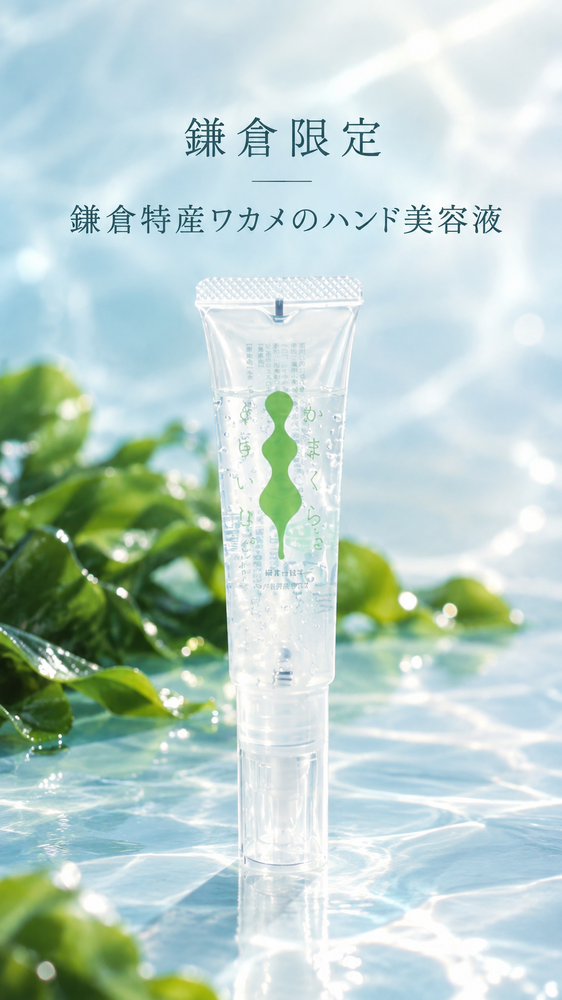
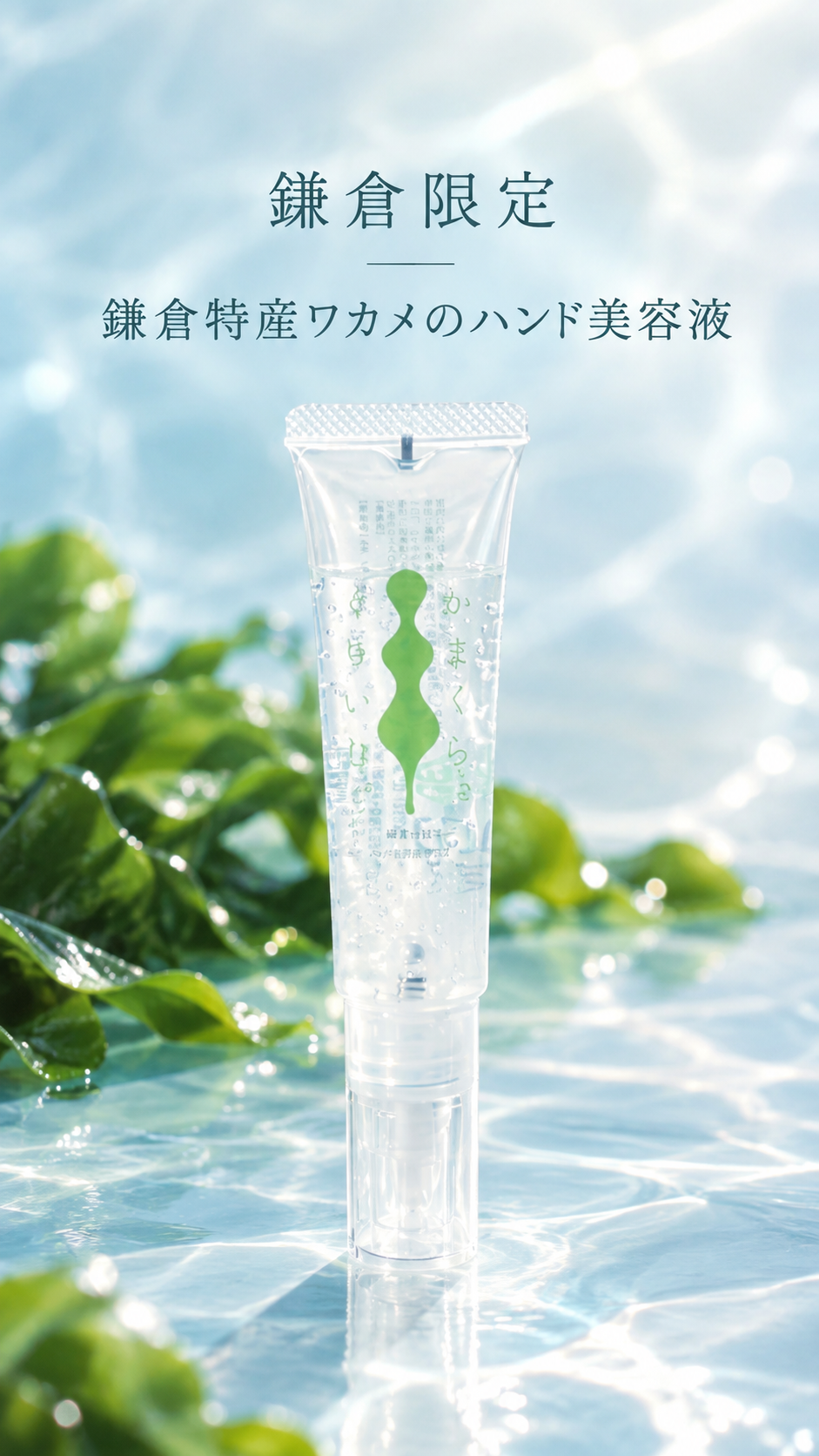
A slightly special souvenir that you can only find in Kamakura.
Extracted from natural wakame seaweed, a specialty of Kamakura.
A hand serum formulated with wakame seaweed extract.
Made using only naturally derived ingredients,
Fragrance-free, with a light and pleasant feel.
The packaging is made from 70 different artworks.
You can choose your favorite design.
Apply Kamakura wakame seaweed to your hands.
Bring Kamakura art closer to you.
A small shop, with only one item in stock.
"Snow hut, cream."
Hand serum specialty store
This product is only available in Kamakura and sold at our store.
#KamakuraTourism #KamakuraSouvenirs #KamakuraSoloTrip #KamakuraTravel #KamakuraSouvenirs
Basic things to know to avoid getting lost when choosing souvenirs in Kamakura
Kamakura offers a wide variety of souvenirs, from classic Japanese sweets and baked goods to unique souvenirs that will serve as lasting mementos of your trip. First, consider "who you're giving the gift to, when, and on what occasion." This will help narrow down your choices. Here, we'll introduce some basic tips for finding a gift that combines the essence of Kamakura with practicality.
It's important to value both the essence of Kamakura and the preferences of the other person.
When choosing souvenirs from Kamakura, consider not only what is characteristic of the area, but also whether it suits the recipient's taste and lifestyle. For example, sweets and small items with designs reminiscent of temples, shrines, the sea, or old townscapes are good ways to convey the atmosphere of your trip. On the other hand, even if a gift features a Kamakura-esque design, it might not be well-received if the recipient avoids sweets or doesn't like decorative items.
Someone who previously consulted me about gifts to distribute at work was unsure, saying, "I want to choose something that reflects Kamakura's character, but I don't know their preferences." So, I suggested choosing individually packaged baked goods that don't have a strong flavor preference, and adding packaging that evokes the scenery of Kamakura. This way, the impression of the region can be conveyed not only through the taste of the product itself, but also through its appearance and ease of distribution, making it easier to choose a gift for someone. Of course, when actually making your selection, it's best to check the contents and packaging in person at the store to ensure they meet your expectations.
For family and close friends, it's a good idea to choose a gift while recalling conversations you've had with them. For those who like Japanese sweets, seasonal items are a good choice, while for those who don't have a sweet tooth, stationery or fabric accessories, or other goods that incorporate the scenery and culture of Kamakura, would be good options. If you're not sure of the recipient's preferences, choosing something with subtle colors and patterns and an obvious purpose will be less burdensome.
"Kamakura-ness" isn't just about having the place name written on it. If you choose an item that connects to a memorable sight or event from your trip, and add a short message, you can convey those memories along with the gift. Think about the recipient and try to find an item that combines the charm of the region with practicality.
Narrow down your choices based on your budget and how long you'll be carrying it around.
When choosing souvenirs from Kamakura, it's helpful to organize your budget, the number of people you'll be giving them to, and the travel time after purchase before deciding on your options. For example, if you're giving them to colleagues at work, divide the total budget by the number of people to get an idea of how much you can spend per person. For boxed sweets, check not only the price but also the number of pieces. Checking whether there's enough for everyone, or even including some extras, will prevent you from rushing around when you get home.
Whether you can give the gift immediately after purchase or a few days later is an important factor to consider. For food items, check the expiration date and choose items that have plenty of time before you give them away. For fresh sweets and items that require refrigeration, consider how long you'll be carrying them and where you'll store them when you get home before purchasing. In particular, if you plan to continue sightseeing, buying items that require refrigeration first can be troublesome. Asking the store staff about storage methods and confirming whether they are suitable for travel time is one way to go.
When buying miscellaneous goods, in addition to price, consider size, weight, and fragility. If you're traveling long distances on foot or by train, items that fit easily into a bag and don't strain your hands are convenient. For ceramics and glass products, check the packaging and how to carry them home. If you anticipate having to carry multiple paper bags, simply adjusting the stores you buy from and the order in which you buy them can make your journey easier.
Previously, someone who consulted me about choosing souvenirs said they went around to shops without setting a budget, and ended up worrying about whether they could find enough for everyone. If you decide on a budget and a rough estimate of the number of items beforehand, it will be easier to compare options in stores. While leaving the fun of searching for items that are uniquely Kamakura, let's check your budget, the date you'll give the gifts, and how easy they are to carry, and choose something that fits your itinerary.
Classic sweets and Japanese confectionery that are easy to choose as souvenirs from Kamakura
Food souvenirs are a classic choice, easy to give to family, friends, and colleagues. Different types of sweets are suitable for different occasions, such as traditional Japanese confections that evoke the atmosphere of Kamakura, or baked goods that are relatively easy to carry. It's important to consider not only the appearance but also the shelf life and packaging when making your selection.
When choosing Japanese sweets, pay attention to the seasonality and design.
When choosing Japanese sweets as a souvenir from Kamakura, consider not only the taste but also the seasonal feel conveyed in their shape, color, and packaging. You can find items that evoke the atmosphere of the season and region through their appearance, such as those shaped like flowers and trees, or those with subdued colors. The design can also serve as a conversation starter when you tell the recipient that you found them in Kamakura. Checking the descriptions in stores to see what ingredients and themes are used will further enhance your selection experience.
However, delicate fresh confections may require careful handling and storage. Some have short shelf lives or require refrigeration, so check the label before purchasing and consider when the recipient will be able to receive them. If you plan to buy them during your sightseeing and carry them around for a long time, it's a good idea to ask the shop staff about storage instructions. If you can't give them away immediately after returning home, choosing items that have a relatively long shelf life or can be stored at room temperature will make them easier to handle.
When I received inquiries, some people said, "I want to buy beautiful-looking Japanese sweets, but I'm worried about whether I can carry them home over a long distance." In such cases, it's a good idea not to decide based solely on the beauty of the design, but also to check the sturdiness of the box and whether the packaging prevents the sweets from moving around inside. If you're distributing them to multiple people, you should also consider whether they need to be cut and whether there are enough pieces.
When choosing Japanese sweets, you can also select them according to the season or the time of year you're giving them. For example, choose sweets with colors reminiscent of flowers in spring, or designs that evoke the bounty of autumn, making it easier to share seasonal topics with the recipient. In addition to considering the atmosphere of Kamakura and the recipient's preferences, be sure to check the shelf life and ease of transport, and choose a sweet that fits your schedule.
When choosing baked goods that are easy to distribute, check for individual packaging and a long shelf life.
If you're looking to bring a souvenir from Kamakura to the workplace or a gathering, individually packaged baked goods are a good choice. Because they can be given out one by one, they are easy to distribute even after the box is opened, and recipients can eat them at their convenience. Packaging that doesn't require direct contact with hands is also easy for the person distributing them. However, even individually packaged items come in various sizes and shapes. In addition to ensuring there are enough for everyone, consider whether you'll be handing them out individually at work or leaving them in a break room for people to take freely, and choose something that suits your distribution method.
When purchasing, check the expiration date and storage instructions. If you can't give the gift on the day you return from your trip, or if you don't know the recipient's schedule, it's convenient to choose something that can be eaten at a leisurely pace. Some items need to be kept away from direct sunlight and high temperatures and humidity, so if you plan to carry them around for a long time after purchase, check the packaging for storage instructions. Baked goods are generally easy to carry, but handling instructions vary depending on the product.
When someone asks, "Since there are many people, I'd like to find something affordable and easy to distribute," instead of just comparing the price of the boxes, it's helpful to calculate the cost per person by dividing the price by the contents to narrow down the options. Consider the number of boxes needed, including spares, and check that the boxes aren't too big and that they fit in a bag. Be careful with thick boxes or delicate baked goods so they don't get crushed under other luggage during transport.
When choosing a product that is representative of Kamakura, pay attention not only to the taste and shape, but also to the scenery and design depicted on the packaging. If you choose after checking the individual packaging, shelf life, number of servings, and ease of carrying, you can easily find something that is both visually appealing and easy to distribute.
Souvenirs that let you enjoy the essence of Kamakura, other than sweets.
For those who are trying to cut back on sweets, or those looking for a lasting souvenir, miscellaneous goods are also a great option. There are many choices, from patterns reminiscent of Kamakura's scenery and history to small items that can be easily incorporated into daily life. Imagine how the item will be used, and choose a size and price that won't be a burden on the recipient.
When choosing cute accessories, also check for ease of use and portability.
Choosing keychains, stationery, or fabric accessories as souvenirs from Kamakura allows you to give a tangible gift that commemorates your trip. Patterns reminiscent of temples, shrines, the sea, or the townscape can also serve as a way to convey the essence of Kamakura. However, don't just choose based on cuteness; try to imagine how the recipient will actually use the item. A small ornament might be useful for someone who keeps their keys together, and stationery would be a good choice for someone who writes a lot. For items where it's difficult to imagine a use for them, it's best to choose them only if you know the recipient's preferences.
Size and weight are also important points to check before purchasing. Consider whether you can carry it home in your bag and whether it will take up too much space with other luggage. For small items made of fragile materials such as ceramics and glass, it's a good idea to check how they are packaged and carried at the store. For fabric products and stationery, check if items that are easily damaged or would be damaged if they get wet are suitable for transport home.
Previously, someone was hesitant about giving a gift, saying, "I found a cute ornament, but I don't know if the recipient has a place to display it." At that time, I suggested they also consider small, everyday items rather than something that would be difficult to find a place for. Of course, if you know the recipient collects ornaments, choosing something that suits their taste is also a good idea. The important thing is to consider not only the giver's preferences, but also how practical the gift will be after it's received.
Small items that combine the distinctive design of Kamakura with practicality are likely to help recipients cherish their travel memories for a long time. Before purchasing, be sure to check the intended use, size, weight, and durability to choose an item that will seamlessly fit into the recipient's lifestyle.
For gifts other than food, choose something that suits the recipient's lifestyle.
When choosing souvenirs from Kamakura other than food items, it's important to consider whether they will suit the recipient's lifestyle, as they are tangible gifts that will last. There are many types of goods, including stationery, fabric accessories, and everyday items. Knowing what the recipient frequently uses, their favorite colors, or patterns they are interested in will make choosing easier. Items incorporating designs reminiscent of Kamakura's sea, temples, shrines, or townscape will also convey the impression of your trip.
On the other hand, ornaments and large decorations may suit the recipient's taste, but they can be difficult to find a place for. When you're unsure of their preferences, consider items that don't take up much space and have a clear purpose. For example, small fabric items or stationery that can be used daily don't require the recipient to find a place to display them. However, they might already own such items, so think about their lifestyle and whether they can easily use them.
Previously, someone who consulted me about choosing souvenirs was unsure what to give to a family member who didn't like sweets. Hearing that the family regularly used notebooks, I suggested stationery featuring Kamakura scenery. This approach allows you to avoid food while also including a travel memento. When giving the gift, adding a simple phrase like, "I chose this remembering the scenery I saw while strolling around," helps convey the sentiment behind the gift.
If you're unsure of the recipient's preferences, choose an item with understated colors and patterns, low maintenance, and easy to carry home to minimize their burden. Instead of focusing solely on items that evoke the spirit of Kamakura, try to imagine where and how they will use the gift after receiving it. A gift that fits seamlessly into their daily life is a great way to subtly convey memories of your trip.
Tips for choosing souvenirs while strolling along Komachi Street and other areas.
When searching for souvenirs while enjoying sightseeing and trying local food, it's important to consider the order in which you buy them. Buying food early can make carrying and storing it a concern, while waiting until the last minute might leave you with insufficient time to choose. Consider your sightseeing flow and luggage to make efficient choices.
On Komachi Street, I look at potential candidates first and then make my purchase on my way out.
If you're strolling along Komachi Street looking for souvenirs in Kamakura, it's a good idea to decide whether to buy something as soon as you find something you like, or to keep it in mind as a potential purchase, to avoid carrying too much in your luggage. First, walk down the street and check the prices, contents, and packaging of any shops or products that catch your eye. If you take photos, check the signs in the shops to see if it's okay, and then record your notes or mark the location on a map, it will be easier to review them on your way back.
Especially with food items, it's important to check how to store them after purchase. Even items that can be carried at room temperature may need to be kept away from high temperatures and direct sunlight in the summer. Refrigerated items and fresh pastries will require carrying them for a long time if purchased at the beginning of your stroll, so either buy them on your way back or ask the store staff about how to carry them. Store hours and inventory levels vary, so the items you intend to buy later may not always be available. For items with limited quantities, you can ask a staff member beforehand if they can reserve them for you.
Someone I spoke to previously mentioned that they bought some sweets they found while strolling around, but as they continued with lunch and shopping, the number of paper bags piled up, making it difficult to move around. In such cases, it's best to enjoy eating and sightseeing first, and buy fragile or heavy items last to reduce the burden. However, trying to decide everything right before leaving can lead to rushing due to crowds and closing times. The key is to narrow down your choices early.
On Komachi Street, you can enjoy taking the time to compare several items before making a decision. Adjust the order in which you purchase items based on their expiration dates, storage conditions, and the amount of luggage you have. If you have some candidates in mind beforehand, it will be easier to calmly choose a Kamakura-style item when you leave.
Before buying, check how long you'll be carrying it around and how you'll store it.
Before buying souvenirs, consider the travel time until you return home and the conditions under which you will be carrying them after purchase. Even among food items, the appropriate handling varies depending on the product; some can be carried at room temperature, some require refrigeration, and others need to be kept away from direct sunlight and high temperatures. Read the storage instructions on the packaging, and if you are unsure, ask a store employee. Pay particular attention to the timing of your purchase, especially on hot days or if you plan to continue sightseeing before returning home.
When exploring Kamakura, you may spend a considerable amount of time walking or traveling by train. It's helpful to consider how long you'll be carrying your purchases, whether you'll be able to place them in a cool place along the way, and whether you'll be able to refrigerate them immediately upon returning home. If you're bringing home items that require refrigeration, check with the store about the availability of ice packs or insulated bags, and ask about the estimated cooling time. Even with cooling, it's not guaranteed that items will last for long journeys, so always follow the store's instructions.
Even with small items, you need to consider how you'll take them home. Check if the paper bag handles are sturdy, if the packaging is resistant to rain, and if it will break when placed with other luggage. For ceramic and glass items, discuss how they will be wrapped and make sure they won't move around in your bag. For large items, it's reassuring to consider in advance whether the wrapping will be suitable for your return transportation and the amount of luggage you have.
I once saw someone choosing souvenirs without checking how to store them, and ended up worrying about where to put them throughout their trip. If you check how long you'll be carrying them and how to store them before deciding on an item, you'll have more time to enjoy your trip. In addition to choosing something that's uniquely Kamakura, make sure you can handle it without any problems until you get home.
How to find souvenirs that you can only buy in Kamakura
Many people think, "If I'm going to Kamakura, I want to give a gift that's unique to the area." However, instead of relying solely on the word "limited edition," you can make a more satisfying choice by looking at the connection to the local scenery and culture, and the background of the product. Try searching using something that left a lasting impression on you during your own travels as a starting point.
Focus on designs that convey the local landscape and culture.
When looking for souvenirs that you can only buy in Kamakura, pay attention not only to the place name but also to how the local scenery and culture are represented. Colors and patterns that evoke the sea, mountains, temples and shrines, or old townscapes can serve as clues to recall the scenery you saw on your trip. Knowing the theme and origin of the item allows you to tell the giver, "I chose this after seeing this scenery," and it can easily spark conversation.
For example, if a particular landscape left a lasting impression during your stroll, you could look for postcards, fabric accessories, or sweets with similar designs on the packaging that depict that scenery. Items linked to travel memories can hold a different meaning than simply items bearing the name "Kamakura." Reading the product description and information on the packaging to understand what place or culture it represents will help you find a reason to choose it.
I was once asked, "Are there any items that convey the essence of Kamakura, even if they aren't limited editions?" That person chose a small item with a pattern that reminded them of the color of the sea they saw during their sightseeing, and decided to share stories about the places they visited when giving it as a gift. Rarity isn't the only thing that creates a sense of exclusivity; sharing memorable scenery or experiences with the recipient is also part of the charm of souvenirs.
However, even if you are drawn to the design, you should check whether it is easy for the recipient to use, whether it has a long shelf life if it is a food item, and whether it is easy for them to carry home. Choosing an item that reflects a connection to the local area and that aligns with the recipient's preferences and intended use will naturally convey the time you spent in Kamakura. As you recall the scenery that left a lasting impression on you during your trip, try to find an item with a story behind it.
Compare not only the limited availability but also the intended use and quality before making your choice.
The "Kamakura Limited Edition" label adds a special touch that makes it feel unique to a travel destination. However, don't just decide based on that label; also consider how easy it is for the recipient to use and carry home. For food items, check the quantity, expiration date, and storage instructions. If you have time before giving the gift, make sure there's enough time before the expiration date, and consider whether items that require refrigeration during travel can be easily incorporated into the itinerary. For miscellaneous goods, consider the material, size, ease of care, and durability when making your selection.
I once had someone ask me for advice, saying, "I want to buy a limited edition item, but I'm not sure if the recipient will actually use it." In that case, we considered not only whether or not it was labeled as limited edition, but also the recipient's preferences and how they might use it in their daily life. For someone who regularly uses stationery, a small piece of stationery would be good; for someone who enjoys sweets, easily portable sweets would be suitable. If the item suits the recipient, you can convey the feeling of travel even if it's not a limited edition. Conversely, even if an item has a special label, if it's difficult to store or has limited uses, it might not be suitable for everyone.
When comparing products, be sure to check the balance between price and quality. For food items, check the ingredients and packaging; for general merchandise, check the finish and usability in the store. If there is a description, reading about its connection to the region and manufacturing background may clarify your reasons for choosing that product. If you have any questions, it's a good idea to ask a store employee.
Considering the essence of Kamakura, the recipient's intended use, quality, and ease of transport will lead to a satisfying choice. Use the word "limited edition" as a starting point for finding candidates, and make sure to choose something that suits the recipient.
How to choose inexpensive souvenirs from Kamakura, based on examples of consultations.
Let's consider a scenario where someone asks, "I want to give something that's typical of Kamakura, but I need to keep the budget down because there are so many people." Choosing solely based on price can lead to insufficient quantities or difficulties in distribution. Comparing the price per person, the quantity, and the ease of packaging together will make it easier to find a satisfactory option.
When choosing souvenirs to distribute at work, prioritize quantity and ease of distribution.
When bringing souvenirs from Kamakura to the workplace, first determine how many people you'll be giving them to and check if you have enough boxes. It's a good idea to leave a little extra in case some people are off work or can't receive them on the day, as this will make distribution easier. Don't just compare prices by box; calculate the amount per person based on the contents to make it easier to choose something that fits your budget.
If ease of distribution is a consideration, whether the items are individually packaged is important. Items that can be handed out one by one are easy to handle when placed in a break room or similar area for employees to take, and there is no need to cut them. Also, check if the packaging is easy on the hands and if the size is easy to store in the workplace. You will also want to check whether the contents are likely to spill out after opening the box and whether they are likely to break or crumble during transport.
I once received a request for advice from someone who wanted to choose something representative of Kamakura while keeping the budget down, given the large number of people. When comparing options, I found it easier to narrow down the choices by first determining the required number of items and then looking at the quantity and price, mainly focusing on individually packaged baked goods. If the packaging features designs that evoke the scenery or region of Kamakura, it allows you to convey the impression of the travel destination while also making it easy to distribute.
Check the expiration date by working backward from the day you plan to distribute the gifts at work. If you can't give them out immediately after returning from your trip, it's best to choose items with a longer shelf life. Also, check if there are any rules regarding bringing in or distributing food at your workplace, if necessary. If you organize the number of items, budget, individual packaging, and shelf life beforehand, you can choose calmly even if there are many people. Don't just decide based on the impression from the magazine or packaging; imagining the specific situation in which you'll be distributing the gifts will lead to choosing souvenirs that people will enjoy giving.
Small touches that strike a balance between affordability and the essence of Kamakura.
When choosing souvenirs from Kamakura to distribute to a large group of people, such as colleagues at work, it's easier to select items that convey the essence of the destination while staying within budget. First, decide on a target amount per person and then compare it with the number of items needed to find suitable options. You can choose one large box, or combine several reasonably priced items. Check whether items are individually packaged and have a reasonable shelf life, then compare the quantity and price to find something that fits your budget.
The essence of Kamakura doesn't necessarily have to be expressed through expensive, limited-edition items. Simply choosing items with packaging that evokes the local scenery and culture, or with designs related to the region, can add a sense of your travels. If you prioritize the price of the contents, adding a little ingenuity to the packaging or how you present it is one option. For example, including a photo of scenery taken in Kamakura or a short note about the places you visited will make it easier to convey why you chose it.
I once had someone consult me saying, "There are so many people, if I give everyone the same thing, I'll probably exceed my budget." They adjusted their budget by preparing individually packaged sweets for colleagues and choosing different small items for close friends. You don't need to prepare the same price range for everyone; you can also consider your relationship with the person and the occasion when you're giving the gift.
Choosing solely based on price can lead to insufficient quantities or difficulties in distribution. By considering the required number of items and the cost per person, and thinking about how to convey the essence of Kamakura, you can make a satisfying choice within your budget. Find the perfect item that fits your budget while also incorporating thoughtful touches to express your feelings.
Common mistakes when choosing souvenirs and points to check before purchasing.
Sometimes, gifts chosen based on their appearance can be difficult to give as gifts once you get home, or they may not suit the recipient's taste. Knowing common mistakes beforehand will allow you to make calm decisions even with limited time during your trip. Make it a habit to do a quick check before purchasing, and enjoy choosing souvenirs with peace of mind.
Make sure you don't overlook the expiration date or quantity, and work backward from the day you plan to give it away.
When choosing food items as souvenirs from Kamakura, check the expiration date based on the date you plan to give them to the recipient, not the purchase date. You may not be able to give them immediately after returning from your trip; work or other commitments might mean it's several days later. Make sure there's enough time before you give them, and if they're individually packaged, check the expiration date on each item to be on the safe side. For perishable items like fresh sweets or items that require refrigeration, consider the travel time and storage space after returning home, and decide if they're suitable for someone you can give them to soon.
When choosing a gift, don't just judge by the size of the box; check how many pieces are actually inside. If you're bringing them to work or a gathering, count the number of people you'll be giving them to and make sure there's enough for those who are absent or for spares. Considering the size and ease of eating each piece will help you visualize the distribution situation. Even when giving them to family or close friends, choose a quantity that suits their lifestyle so that they won't be overwhelmed and unable to finish it all.
Previously, someone told me they had bought something because they liked the look of it, but hadn't considered how many days it would take to give it as a gift. By checking the recipient's schedule and switching to an item with a longer shelf life, they were able to prepare everything calmly. Making it a habit to check the expiration date and storage instructions when purchasing, and to work backward from the date you plan to give the gift, can reduce these kinds of misunderstandings.
While paying attention to the design and flavor that are characteristic of Kamakura, be sure to check the expiration date, quantity, and storage conditions. A little checking will make it easier to choose a souvenir that the recipient can enjoy without any hassle.
When you don't know the other person's preferences, prioritize minimizing their burden.
When you don't know the recipient's preferences, it's easier to choose a gift if you prioritize whether it will be convenient for them after they receive it, rather than focusing on its strong individuality. For food items, avoid those with distinctive flavors or aromas, and choose items that a wide range of people can enjoy. Individually packaged items with a long shelf life are convenient for the recipient to eat at their own pace and are easy to store. However, if you are unsure of any allergies or dietary restrictions, it's important to check the ingredients list and avoid forcing anything on them.
When giving miscellaneous goods as gifts, it's generally easier to choose items that don't take up much space and are easy to use. Large ornaments or items that require maintenance can be a burden if they don't suit the recipient's taste. Another option is to choose items that can be easily incorporated into daily life, such as stationery with patterns typical of Kamakura or small fabric accessories, but consider the possibility that the recipient already owns such items and think about their usual habits.
Previously, someone who was unsure what souvenir to give to someone they weren't very close to worried, "What if they don't like it?" In that case, they chose individually packaged sweets that weren't too expensive and didn't take up much space, and added a short explanation of why they found them in Kamakura. By choosing a gift that didn't put too much pressure on the recipient, it became easier for them to accept.
When choosing a souvenir, it's more important that it conveys thoughtfulness than extravagance. If you're unsure of their preferences, check if it's a manageable amount, easy to store and care for, and not a burden to carry home. Try to choose something that incorporates a touch of Kamakura's unique character while being easy to accept.
When choosing souvenirs from Kamakura, select them to match the recipient and the memories of your trip.
There's no single right answer when it comes to souvenirs from Kamakura. Whether you're giving out classic sweets or cute trinkets as mementos, the perfect gift will vary depending on the recipient and the occasion. Let's review the points we've covered so far and organize how to choose gifts that will allow you to happily share your travel memories.
Choose food and gifts according to the recipient and the occasion.
When choosing souvenirs from Kamakura, it's helpful to narrow down your options by selecting food and miscellaneous goods based on the recipient and occasion. For distributing to multiple people, such as colleagues or at a gathering, individually packaged sweets that are easy to portion and have a long shelf life are convenient. Checking how to store the items and how long they will be carried before giving them out will help you prepare with peace of mind.
For family and close friends, Japanese sweets or baked goods tailored to their preferences are good choices. For those who avoid sweets or who want to give a gift that will last, stationery, fabric accessories, and other miscellaneous goods that evoke the scenery and culture of Kamakura are also good options. When choosing miscellaneous goods, it's important to consider whether they will be useful, where they will be stored, and whether they are a convenient size to carry home.
Previously, when I was advising someone on souvenir selection, they said, "I want to give something that can be easily distributed to colleagues at work, and something that will be a lasting memento for my family." So, I suggested individually packaged sweets for colleagues and small everyday items for family, comparing their budget and portability. Even when choosing items from the same travel destination, varying the type of gift depending on the recipient makes it easier to convey your feelings.
The key is to choose a gift based on who you're giving it to and when, rather than deciding whether it's food or a gift beforehand. Take into account the recipient's preferences, the number of people, your budget, and how easy it is to store. Adding a memorable sight or event from your trip to Kamakura will allow you to naturally share your travel memories.
A quick check before buying will help you choose a souvenir you'll be happy with.
Before purchasing, check the number of people you'll be giving gifts to, your budget, the expiration date, storage instructions, and how easy it is to carry home. If you're buying miscellaneous goods, imagine how the recipient will use them and check their size and durability. People who previously struggled to choose souvenirs often compared candidates based on "who they'll be giving it to," "how long they'll carry it," and "ease of use" to choose something they were happy with. It's important not to focus solely on what's typical of Kamakura, but also to consider whether it will be a burden on the recipient. If you choose an item that connects to a memorable sight or event from your trip, it will spark conversation when you give it, allowing you to share the time you spent in Kamakura together.